
You have probably said “I had a gut feeling about it” or “butterflies in my tummy” or “sick to my stomach”, without thinking twice about where those expressions actually come from.
It turns out these phrases are closer to literal biology than most of us realize, and a wave of recent research is giving us a much clearer picture of why making a decision can feel physically uneasy in your stomach long before your conscious mind has finished weighing the pros and cons.
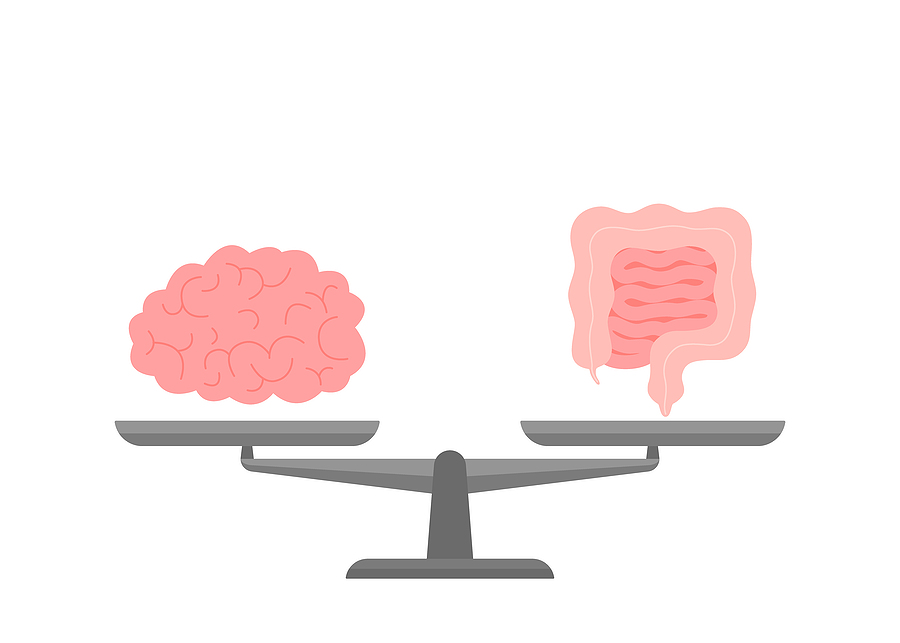
Your gut and your brain are in constant conversation through a channel called the vagus nerve, and roughly eighty percent of the traffic on that nerve runs from your gut up to your brain rather than the other way around, which means your gut is sending far more signals upward than your brain is sending downward. A 2021 review in Nature Reviews Neuroscience laid out how this upward stream of vagal signalling shapes stress responses, mood, and decision-making itself, not just digestion, which reframes the gut as an active participant in cognition rather than a passive organ waiting for orders.
Your gut is quietly running its own nervous system
The gut contains what scientists call the enteric nervous system, a dense web of roughly five hundred million neurons lining your digestive tract, and this network can operate independently of your brain even though the two stay in near constant contact.
A comprehensive narrative review published in October 2025 synthesized peer-reviewed research through August of that year and concluded that the gut microbiome functions as a genuine modulator of central nervous system activity, meaning the trillions of bacteria living in your intestines are shaping mood regulation and cognitive processing rather than sitting quietly on the sidelines.
The same review noted that imbalances in gut bacteria, a condition researchers call dysbiosis, have been linked to impulsivity and cognitive decline, which suggests that the state of your microbiome may be nudging the quality of your everyday choices in ways most people never consider.
Part of the reason this connection runs so deep comes down to chemistry you would not expect to find in your intestines. Somewhere between ninety and ninety five percent of the body’s serotonin, the neurotransmitter most associated with mood regulation, is actually produced in the gut rather than the brain, and while this gut serotonin cannot cross the blood-brain barrier directly, it regulates the enteric nervous system in ways that ripple upward and measurably affect mood and cognitive function. This is one reason why chronic digestive distress and chronic anxiety so often travel together in the same person, and why calming the gut can sometimes calm the mind in ways that talk therapy alone does not fully address.
The science of trusting your gut feeling
There is a specific research area called interoception, which refers to your ability to accurately sense internal bodily signals like your heartbeat, your breathing, and the tightness in your stomach, and a growing body of work is connecting interoception directly to intuitive decision-making. Researchers testing this relationship have repeatedly found that people who are more accurate at perceiving their own bodily sensations, often measured through a simple heartbeat-counting task, also tend to be better at making advantageous intuitive decisions. One well known study published in the journal Biological Psychology found that participants who could track their own heartbeat more precisely showed a stronger link between their physical arousal responses and their emotional judgments, which supports what researchers call the somatic marker hypothesis, the idea that bodily reactions serve as an early warning system that guides choices before conscious reasoning even catches up.
A 2020 intervention study published in BioPsychoSocial Medicine pushed this further by actually training participants to become more accurate at sensing their internal bodily states, and it found a meaningful positive relationship between improvements in interoceptive accuracy and improvements in decision-making rationality, which suggests the gut-brain channel is not a fixed trait you are stuck with but a skill you can sharpen over time. Interestingly, that same research area has found that increased interoceptive ability does not universally improve decisions.
In some cases, sharper awareness of bodily signals actually pulled people toward bad choices, depending on whether the anticipatory signals their body was generating happened to favour the better or the worse option in front of them. In other words, your gut is a powerful input, but it is not infallible and knowing when to consider or the brain it is itself part of the skill.
Who leans on gut feeling, and who leans on analysis
Individual differences show up clearly in this research, and they roughly sort people into two overlapping camps. The first group relies more heavily on what researchers call trait interoceptive sensibility, essentially a strong self-reported connection to their own bodily signals, and this tendency shows up more often in people whose work or training demands constant tuning into subtle physical cues.
Musicians offer one of the more striking examples here, since studies have found that professional singers are measurably better than non-musicians at distinguishing their own heartbeat from an external rhythm, likely because breath control and vocal performance require constant, fine-grained awareness of what is happening inside the body.
Experienced clinicians, athletes, and people in high-stakes operational roles like emergency response or aviation often develop a similar honed sensitivity through repeated exposure to situations where physical signals correlate with real consequences, which is a large part of why seasoned professionals in those fields so often describe knowing something was wrong before they could explain why.
The second group leans more on deliberate analysis, working through information step by step rather than trusting a felt sense in the moment, and this style tends to dominate in professions built around explicit rules, data, and reproducible logic, such as accounting, law, engineering, tech, and many other corners of software development. Neither style is objectively superior, and the research on interoceptive training makes clear that the two are not actually opposites competing for dominance.
The most reliable decision makers tend to be the ones who can move fluidly between the two, using rapid gut level pattern recognition to narrow down options and then applying analytical scrutiny to stress test the option their gut has already flagged, rather than picking one mode and discarding the other entirely.
Putting this to work when you feel stuck
When a decision at work feels stalled, the temptation is almost always to add more information, another meeting, another spreadsheet, another round of opinions from colleagues, but the research on gut-brain signalling suggests that stalling often has less to do with a lack of data and more to do with your body sending a signal your conscious mind has not yet translated into words.
A useful first move when you feel stuck is to physically pause and notice where in your body the hesitation lives, whether that is tightness in your chest, a heavy feeling in your stomach, or a kind of restless energy, because naming the physical sensation is often the fastest route to naming the actual concern underneath it. This is not mysticism; it is simply giving conscious attention to a signal that has likely already been processed by your enteric and autonomic nervous systems well before your prefrontal cortex finished its own analysis.
A second practical habit is to separate the noticing step from the deciding step rather than collapsing them together. Notice the gut reaction first, write it down in a single honest sentence, and only then move into the analytical work of checking whether that reaction holds up against the actual facts of the situation. This two-step process protects you from two opposite failure modes at once, the failure of ignoring a legitimate warning signal because it lacked a tidy justification, and the failure of acting purely on anxiety or hunger or fatigue that your body is misreporting as concern about the decision itself.
Given how directly gut serotonin production and microbiome health are tied to mood regulation, it is also worth remembering that a decision made on poor sleep, an empty stomach, or during a stretch of chronic stress is being filtered through a gut-brain system that is not operating at baseline, so postponing a genuinely stalled decision by even a few hours to eat, rest, or decompress is rarely wasted time.
Finally, treat your gut signal as a hypothesis worth testing rather than a verdict to obey automatically. The research is fairly consistent that interoceptive signals are most trustworthy in situations resembling ones you have meaningful experience with, which is exactly why a veteran negotiator’s gut feeling in a familiar deal carries more weight than a first-time buyer’s gut feeling in an unfamiliar market. If you are operating in genuinely new territory at work, weight your analytical process more heavily and treat your gut reaction as one data point among several. If you are operating in a domain where you have deep repeated experience, your gut has likely absorbed patterns your conscious mind has not fully articulated, and it deserves more trust accordingly.
The takeaway
The line between “thinking it through” and “trusting your gut” is far blurrier than most workplace advice suggests, because your gut is quite literally part of the thinking process, wired into your brain through a nerve carrying mostly upward traffic and chemically entangled with the neurotransmitters that shape your mood and judgment. The best decision makers are not the ones who pick a side between instinct and analysis. They are the ones who have learned to notice what their body is telling them, question it appropriately based on how much real experience backs it up, and then let deliberate reasoning finish the job their gut started.
Sources: Nature Reviews Neuroscience (2021) on vagal afferent signalling and decision-making; a narrative review in Nutrients (October 2025) on gut microbiome, mood, and decision-making; BioPsychoSocial Medicine (2020) on interoceptive training and decision rationality; Biological Psychology research on heartbeat perception and intuitive decision-making.