
Most people avoid feedback like it’s a trap. Why? Because it often feels like one. As the authors of Crucial Conversations put it: “When conversations matter most, we’re often least prepared to handle them.” That’s why we teach the Art of Feedback—because these conversations can’t wait, and when handled well, they’re game changers.
This isn’t about scripts or corporate lingo. It’s about learning a practice—a set of skills that help people speak with purpose, listen with curiosity, and walk away wiser.

• We don’t want to hurt feelings
• We’re not sure it’s “our place”
• We don’t know how they’ll react
• We don’t want their feedback either!
And yet, without these conversations, growth stalls, resentment builds, and your best staff leave!
Words matter. We show you how to:
• Ask permission and create a safe frame
• Start with what’s working to build trust
• Use questions to encourage self-reflection
• Avoid trigger words and defensive reactions
• SBI (Situation–Behavior–Impact)
• Feedforward coaching
• Empathy-first models to understand values and drivers
• Strengths-based approaches to balance clarity and kindness
Like any performance, these conversations need rehearsal. Our roleplay actors help you:
• Practice tone, timing, and delivery
• Learn to read the room and adjust in real time
• Handle emotional responses with grace
Even the most experienced leaders get uncomfortable. You’ll practice how to:
• Stay open and curious (not defensive)
• Ask clarifying questions
• Separate feedback from self-worth
• Turn criticism into insight—and action
The goal isn’t critique. It’s clarity, connection, and change. We’ll show you how to:
• Close the loop with a shared next step
• Build accountability and optimism
• Make the conversation part of a bigger growth mindset
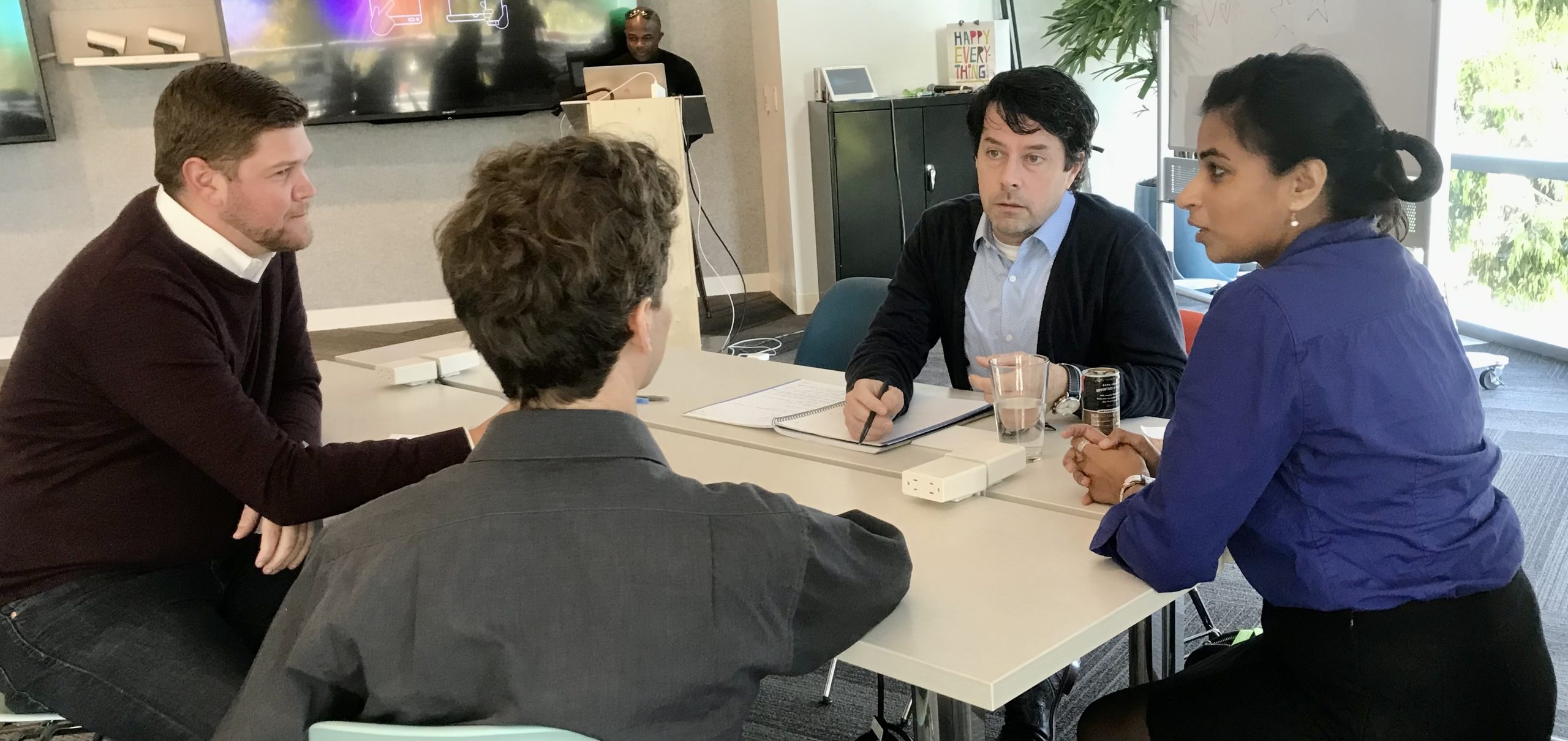

• Managers giving performance or behavioral feedback
• Team members seeking better peer-to-peer conversations
• Anyone who wants to make feedback feel less like a landmine—and more like a learning moment
The Art of Feedback helps people at all levels lead braver, kinder, more productive conversations. Not by avoiding discomfort—but by practicing what to do when it shows up.
Internal training often focuses on the compliance of feedback; filling out forms and following a schedule. Our workshop focuses on the humanity of workplace communication. We use actors to help managers practice empathy, emotional delivery, tone, and the practical feedback skills required to make feedback stick and drive real behavioral change.
Feedback is a two-way exchange. Our actors can simulate a range of reactions, from defensiveness and tears to apathy or passive aggressive behaviour. This allows you to practice and receive coaching on how to stay on track and manage emotions without losing your confidence or the core message.
Yes. We integrate proven frameworks such as SBI (Situation, Behavior, Impact) or The Feedback Bridge. However, we go a step further by having you "rehearse" these models with an actor so they feel natural and authentic, rather than scripted and robotic.
Absolutely. Many managers struggle to give meaningful praise that isn't generic. We teach how to give "High-Impact Affirmation" that reinforces specific behaviors and links them to organizational goals, which is a key driver of employee engagement.
This is the #1 barrier to effective feedback. We use actors to show that clear, honest feedback, delivered with "radical candor" actually builds trust. You’ll practice balancing Challenge with Care, ensuring the relationship stays intact even when the message is difficult.
Yes. We cover the skills needed for peer-to-peer feedback and "upward feedback" (giving feedback to your boss). Actors can simulate the power dynamics of these different relationships, helping you navigate them with professional assertiveness.
The "Art" of feedback includes the "Art of Listening." We use simulations to help leaders identify their own defensive triggers. By practicing how to receive feedback with curiosity rather than defensiveness, leaders set a powerful example for their entire team.
Yes. We often time this workshop to coincide with a company's annual or quarterly review period. We can use your specific performance templates and competencies within our role-play scenarios to make the training immediately applicable.
In some sessions, we record the feedback interaction between the participant and the actor. Reviewing the footage with a facilitator allows you to see your own non-verbal cues (body language, eye contact, micro-expressions) that you might not have been aware of during the heat of the moment.
Companies with a strong "feedback culture" see significantly higher retention rates, faster problem-solving, and better psychological safety. People feel supported to put forward their ideas without fear of failure. By equipping your managers with the skills to address issues early, you prevent small misunderstandings from turning into costly, formal grievances.
Empowering leaders with practice and coaching. Courageous conversations, powerful presentation skills, and confident communication. Transforming workplace culture.
© 2026 Peers and Players.
All Rights Reserved.